Why Delivery Apps Stop Working for Growing Teams
If you are running a growing team, you have probably started with the simplest option. Let everyone order from delivery apps and reimburse later.
In the early days, it feels like the perfect fix. Everyone gets what they want. No planning. No coordination. No friction.
But as the team grows, the cracks show up fast.
What worked smoothly for 10 to 20 people becomes messy at 30, and chaotic at 50 to 100. Orders happen at different times. Food arrives late. Meetings get interrupted. People eat whenever they can. Managers chase receipts and approvals. And lunch quietly turns into a daily disruption instead of a break that restores energy.
That is the moment most teams realize the truth. Individual ordering is convenient, but it does not scale.
Let us break down why delivery apps stop working for growing teams and what smarter companies do instead.
Delivery apps are built for individuals, not organizations
Delivery platforms are designed around a simple workflow. One person orders one meal.
Workplaces are not that simple. Even a mid-sized team has multiple realities happening at once. Different schedules, different dietary needs, different locations, and different approvals and budgets.
So what looked like a simple solution becomes chaos in motion. Everyone orders separately. People keep checking their phones. Deliveries arrive at random times. The office turns into a mini loading dock.
What was convenient becomes noisy and inefficient. For a growing team, food is not just food anymore. It becomes a workflow that interrupts everything else.
If you want one system that works for the whole team, BitesBee offers planned corporate meals with dietary options, shared schedules, and a single accountable delivery flow.
The hidden cost is not the meal. It is the disruption
Even if a company is willing to pay for lunch, delivery apps bring a cost that almost nobody tracks properly. Lost time.
Here is what happens on a normal day. People debate what to order. Orders get placed late. Someone pings the group chat, asking what the plan is. Deliveries arrive in waves. People pause work to collect food. Meetings get delayed or rescheduled.
Now multiply that by a few times a week, and then multiply it again by 50 to 100 employees.
You are not just paying for lunch. You are paying for daily context switching. In a growing company, attention is everything, and delivery apps slowly chip away at it.
Reimbursements and receipts do not scale either
This is where the operations burden starts showing up.
When the team is small, reimbursements feel manageable. But as headcount grows, reimbursements multiply. Receipts come in different formats. Some are missing details. Some are duplicated. Some need explanation. Some need cost splitting across teams or departments. Someone has to track who ordered what and whether it was approved.
Disputes start popping up, too. Someone did not get their meal. Someone ordered the wrong thing. Someone says it was not approved. Finance teams get frustrated. HR gets pulled in. Managers waste time on it.
If you have ever felt like team meals are more effort than they should be, this is why.
Quality and reliability become inconsistent, and people notice
When teams grow, expectations rise. One late delivery or one bad meal is annoying for one person. For a team, it becomes a shared experience, and not the good kind.
People start saying things like lunch was a mess today, half the team did not get their food, it arrived cold again, and meetings got interrupted.
Over time, team meals stop feeling like a benefit and start feeling like a frustration. Once that happens, the perk loses its value, even if the company is still paying for it.
It weakens team culture instead of building it
Growing companies do not just need people to work. They need people to connect.
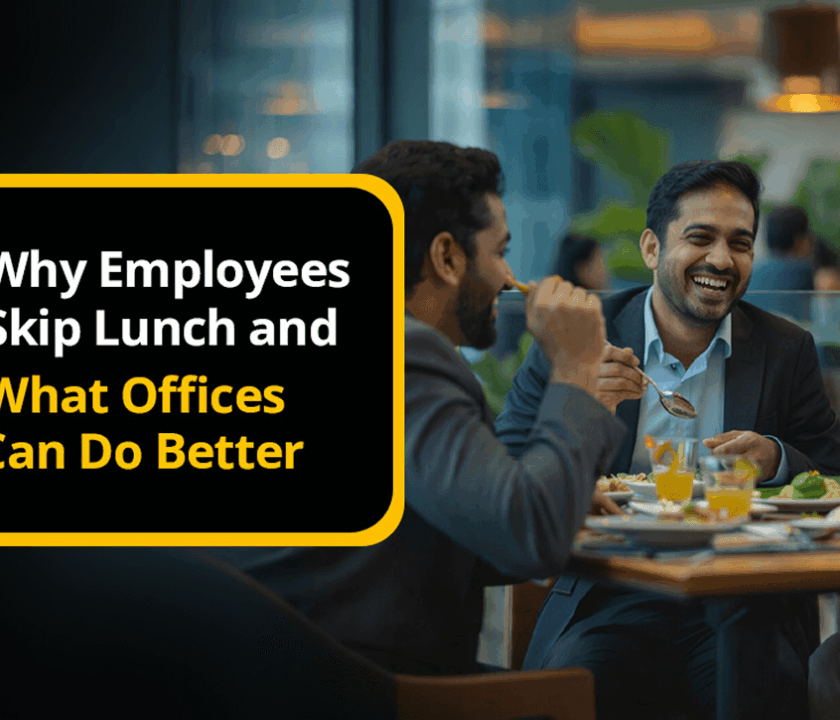
Delivery apps encourage isolation. Everyone orders different food. People eat at different times. Meals happen at desks. There is no shared break and no natural conversation.
But shared meals are one of the simplest ways to build culture. People talk without agendas. Teams bond across departments. New hires integrate faster. Leadership becomes more approachable.
If meals are meant to support culture, individual deliveries often do the opposite.
Want meals to bring people together instead of scattering them? BitesBee helps teams run shared lunch programs that create a natural daily reset.
Flexibility starts becoming a problem, not a feature
Delivery apps feel flexible because everyone can choose what they want. But growing teams need something else even more.
They need predictability.
When meals are handled in a structured way, people know when lunch happens. Work schedules become smoother. Meeting planning becomes easier. Everyone gets included.
Flexibility feels good in theory, until it creates daily uncertainty. A growing team needs a system.
What Growing Teams Do Instead: Planned, Reliable Meal Programs
The solution is not to stop feeding the team. It is to stop using tools that were built for individuals and switch to a system designed for groups.
Modern teams move toward scheduled meals, office meal programs, and pre-planned menus that include dietary options. Instead of everyone placing separate orders, lunch runs on a set cadence with a clear delivery window. People know what to expect, when it will arrive, and how preferences are handled. This removes the daily uncertainty that turns lunch into constant coordination.
Growing teams also simplify responsibility. They prefer one accountable vendor instead of dozens of individual orders and multiple delivery partners. That means fewer missed items, fewer delays, and one clear point of contact when changes are needed. It also improves consistency, because the service is designed around repeatability, not one-off deliveries.
From an operations and finance perspective, structured meal programs replace reimbursements with centralized billing and reporting. Costs become easier to track, approvals become cleaner, and admin teams stop spending time on receipts, follow-ups, and exceptions. Over time, this creates a more reliable process that scales as headcount increases.
Most importantly, this approach reduces friction and turns lunch into something that it should be. A predictable reset that supports productivity, encourages teams to take a proper break, and helps people return to work on time without distractions or delays.
How BitesBee Helps Teams Move Beyond Delivery Apps
BitesBee is built for growing teams that have outgrown individual delivery orders.
Instead of dozens of separate orders, random arrival times, and daily follow-ups, BitesBee runs lunch through a structured corporate meal program. Meals are planned, scheduled, and delivered consistently, so employees know what to expect and admin teams are not stuck coordinating every day.
Menus include balanced options and dietary preferences, handled through the system rather than last-minute messages. Billing is centralized, so finance teams avoid reimbursements, scattered receipts, and unclear approvals.
Most importantly, lunch becomes a predictable reset and a shared team moment, not a daily disruption.
How BitesBee Helps Teams Move Beyond Delivery Apps
BitesBee is built for growing teams that have outgrown individual delivery orders.
Instead of dozens of separate orders, random arrival times, and daily follow-ups, BitesBee runs lunch through a structured corporate meal program. Meals are planned, scheduled, and delivered consistently, so employees know what to expect and admin teams are not stuck coordinating every day.
Menus include balanced options and dietary preferences, handled through the system rather than last-minute messages. Billing is centralized, so finance teams avoid reimbursements, scattered receipts, and unclear approvals.
Most importantly, lunch becomes a predictable reset and a shared team moment, not a daily disruption.
Why teams outsource corporate meals to BitesBee
- Predictable lunch schedule and reliable delivery window
- One accountable partner instead of many vendors
- Balanced menus with dietary preferences handled upfront
- Centralized billing and cleaner reporting
- Fewer interruptions and less admin coordination
- Better employee experience and stronger team routine
Final Thoughts
Delivery apps are great when you are small. But once you are growing, they create hidden problems. Productivity disruption, admin overhead, inconsistent experience, and weaker culture.
If you want your team to move faster, work better, and feel more connected, do not patch the problem with more reimbursements.
Build a meal system that scales.
That is the difference between feeding people and supporting a growing company.